



ADC Payloads
ADC Cytotoxins
ADC payloads are cytotoxic agents that induce target cell death in Antibody Drug Conjugates (ADCs). An ADC is a targeted agent composed with a monoclonal antibody, a linker and a payload. The payload is the most important component as it determines the potency to kill cancer cells of an ADC.
There are many payloads which are currently being used such as Calicheamicins, Duocarmycins, Pyrrolobenzodiazepines (PBDs), Camptothecins, Daunorubicins/Doxorubicins, Auristatins and Maytansinoids. They can be divided in two classes based on their mechanism of action, DNA damaging agents and tubulin inhibitors. Among them Calicheamicins, Duocarmycins and PBDs are DNA minor grove binders, Camptothecins and Daunorubicins/Doxorubicins are topoisomerase inhibitors, which are DNA damaging agents. Auristatins and Maytansinoids are tubulin inhibitors.
ADC Payloads Isoform Specific Products
-
ADC Payloads
(217)
View all products
-
Auristatin
(15)
View all products
-
Calicheamicins
(1)
View all products
-
Camptothecins
(42)
View all products
-
Daunorubicins/Doxorubicins
(11)
View all products
-
Duocarmycins
(18)
View all products
-
Maytansinoids
(9)
View all products
-
Pyrrolobenzodiazepines
(8)
View all products
-
Traditional Cytotoxic Agents
(24)
View all products
All Product Categories
-
ADC Payloads Related Products (370)
Related Products (370)

-
Antibodies (2)
-
Related Compound Screening Libraries (1)
-
ADC Payloads Isoform Comparison
-
Tubulysin IM-2
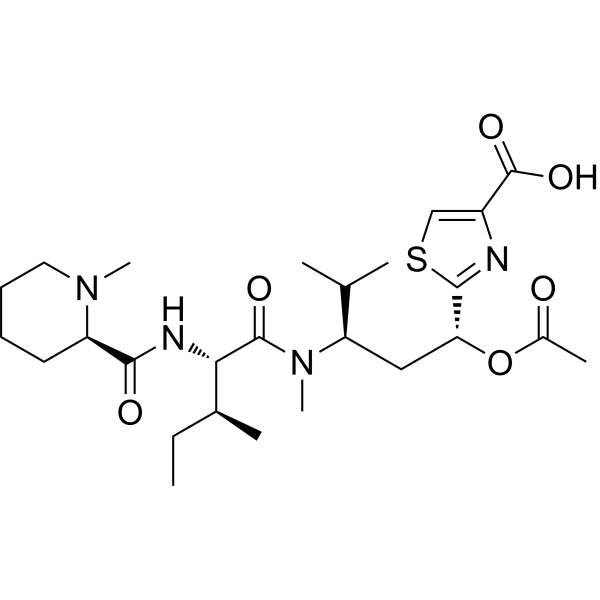 0 ImagesCat. No.: HY-130959CAS No.: 1032072-50-6Tubulysin IM-2 is a microtubule/Tubulin inhibitor that can act as an ADC cytotoxin (ADC Cytotoxin) and an anti-microtubule toxin (anti-microtubule toxins). Used for ADC synthesis.
-
O-Me Eribulin
 0 ImagesCat. No.: HY-159576CAS No.: 2676196-81-7Synonyms: O-Me B1939; O-Me E7389; O-Me ER-086526O-Me Eribulin is a derivative of Eribulin and is an ADC cytotoxin that can be used for ADC synthesis. O-Me Eribulin can inhibit the cell viability of SKBR3, MDA-MB-468, and A549 cells, with IC50 values of 0.2052, 0.1827, and 0.5151 nM, respectively. O-Me Eribulin can be used for tumor research.
-
EBET-1593
 0 ImagesCat. No.: HY-177244CAS No.: 3031540-97-0EBET-1593 is a BET PROTAC degrader. EBET-1593 can promote the ubiquitination and degradation of BET. EBET-1593 is a lead payload. EBET-1593 can be used to synthesize ADCs, such as 84-EBET. 84-EBET has antitumor effects against pancreatic ductal adenocarcinoma.
-
7-Epi 10-desacetyl paclitaxel (Standard)
 0 ImagesCat. No.: HY-77572RCAS No.: 78454-17-8Synonyms: 7-epi-10-deacetyltaxol (Standard); 10-Deacetyl-7-epipaclitaxel (Standard)7-Epi 10-desacetyl paclitaxel (Standard) is the analytical standard of 7-Epi 10-desacetyl paclitaxel. This product is intended for research and analytical applications. 7-Epi 10-desacetyl paclitaxel (7-epi-10-deacetyltaxol), a taxol derivative, exhibits cytotoxicity against HeLa cells with an IC50 of 85 μM.
-
(R)-(4-NH2)-Exatecan
 0 ImagesCat. No.: HY-145397ACAS No.: 3123392-57-1Synonyms: (R)-AZ14170132(R)-(4-NH2)-Exatecan is the R enantiomer of (4-NH2)-Exatecan (Compound A). (R)-(4-NH2)-Exatecan, a topoisomerase inhibitor, is a derivative of Exatecan. (R)-(4-NH2)-Exatecan can be used in the synthesis of antibody-drug conjugates (ADCs).
-
TLR7 agonist 29
 0 ImagesCat. No.: HY-173070CAS No.: 2275612-76-3TLR7 agonist 29 (Compound 1) is the agonist for TLR7 with an EC50 of 5.2 nM for human TLR7 (EC50 for mouse TLR7 is 48.2 nM). TLR7 agonist 29 activates bone marrow-derived macrophages (BMDMs), stimulates myeloid cells in the tumor microenvironment, promotes the expression of PD-L1, CD86 and IFN-α. TLR7 agonist 29 can be used as payload for synthesis of ADC.
-
Agrochelin
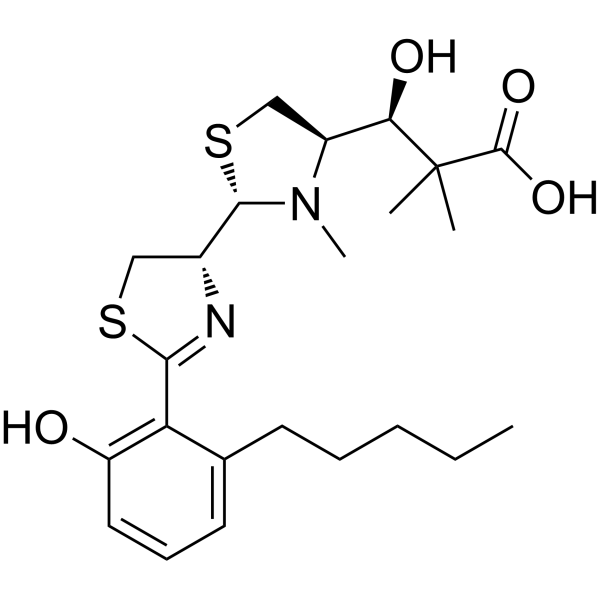 0 ImagesCat. No.: HY-130995CAS No.: 247115-74-8Agrochelin, an alkaloid cytotoxic antibiotic, is produced by the fermentation of a marine Agrobacterium sp. Agrochelin has cytotoxic activity in tumor cell lines.
-
Anti-CCL2 (Carlumab)-MC-Vc-PAB-DMEA-PEG2-Duocarmycin SA
 0 ImagesCat. No.: HY-171685Anti-CCL2 (Carlumab)-MC-Vc-PAB-DMEA-PEG2-Duocarmycin SA is an antibody-drug conjugate (ADC) consisting of the humanized anti-CCL2 (chemokine ligand 2) antibody Carlumab (HY-P99188) conjugated with the linker MC-Vc-PAB-DMEA-PEG2 and the DNA alkylator Duocarmycin SA (HY-12456). Anti-CCL2 (Carlumab)-MC-Vc-PAB-DMEA-PEG2-Duocarmycin SA can be used in cancer research.

-
seco-CBI dimer
 0 ImagesCat. No.: HY-185488CAS No.: 2592397-70-9seco-CBI dimer is a DNA alkylating agent and a prodrug of Duocarmycin, which can serve as a payload for synthesizing antibody-drug conjugates (ADCs). seco-CBI dimer binds to the minor groove of A-T-rich regions in DNA, alkylates the N3 position of adenine residues, and induces DNA strand breaks. seco-CBI dimer can be used in the research of non-Hodgkin's lymphoma.
-
Akt/ROCK-IN-1
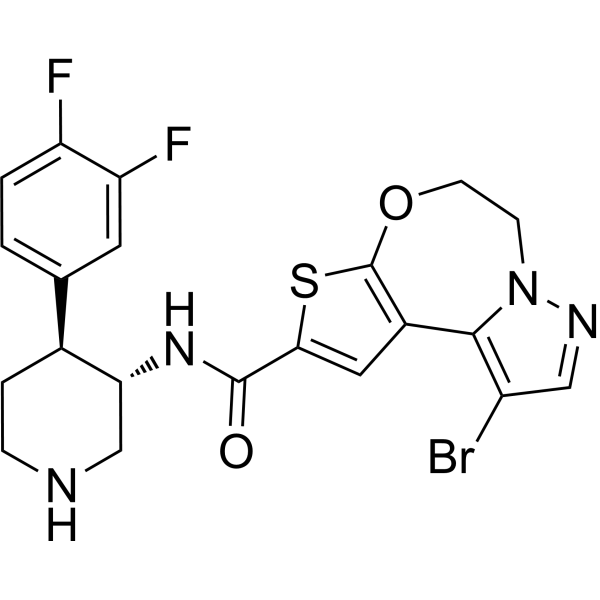 0 ImagesCat. No.: HY-156796CAS No.: 2983889-44-5
-
Fmoc-PEG6-VCP-Eribulin
 0 ImagesCat. No.: HY-177549CAS No.: 2841688-52-4
-
Duostatin 5-13C,d3
 0 ImagesCat. No.: HY-145149SDuostatin 5-13C,d3 is the 13C-labeled Duostatin 5 (HY-145149). Duostatin 5 is a ADC Cytotoxin designed based on MMAF (HY-15579) and can be used to synthesize ADCs. The preparation of Duostatin 5 has the advantages of fewer synthetic steps, simple operation, less difficulty in quality control, and more stable chemical synthesis process. Duostatin 5 can be linked to the antibody targeting 5T4 (ZV05) by cross-linking with interchain cysteines through a disubstituted C-Lock linker. Duostatin 5 is a click chemistry reagent. It contains an azide group and can undergo copper-catalyzed azide-alkyne cycloaddition (CuAAc) with molecules containing alkyne groups. It can also undergo ring strain-driven alkyne-azide cycloaddition (SPAAC) with molecules containing DBCO or BCN groups[1][2].
-
Exatecan-3-amine
 0 ImagesCat. No.: HY-178265CAS No.: 3035271-49-6Exatecan-3-amine is an effective exatecan derivative. Exatecan-3-amine can be connected to monoclonal antibodies via linkers to form antibody-drug conjugate (ADC) molecules. Exatecan-3-amine is often combined with CLDN6 mAb to form ADC drugs for the study of tumors with high expression of CLDN6.
-
7-MAD-MDCPT-AC-(s-cyclopropane)-d2
 0 ImagesCat. No.: HY-179204SCAS No.: 2911575-77-27-MAD-MDCPT-AC-(s-cyclopropane)-d2 is the deuterium labeled 7-MAD-MDCPT-AC-(s-cyclopropane) (HY-179204). 7-MAD-MDCPT-AC-(s-cyclopropane) is a derivative of camptothecin. 7-MAD-MDCPT-AC-(s-cyclopropane) can be connected to monoclonal antibodies via linkers to form antibody-drug conjugate (ADC) molecules. 7-MAD-MDCPT-AC-(s-cyclopropane) can be used for cancer research.
-
Di(MMY-SJG)-Ph-prop-2-yne-1-sulfonic acid
 0 ImagesCat. No.: HY-176972CAS No.: 3037777-07-1Di(MMY-SJG)-Ph-prop-2-yne-1-sulfonic acid (Compound 5) is a cytotoxic pyrrolobenzodiazepine (PBD) dimer derivative. Di(MMY-SJG)-Ph-prop-2-yne-1-sulfonic acid exhibits moderate DNA alkylating activity. Di(MMY-SJG)-Ph-prop-2-yne-1-sulfonic acid can be used as the payload of ADC, thereby demonstrating strong antigen-dependent cytotoxicity.
-
LD2-3
 0 ImagesCat. No.: HY-178238CAS No.: 3040077-52-6LD2-3 is a cytotoxic compound derived from Exatecan (HY-13631), designed to be conjugated with anti-FGFR2b or anti-CEA antibodies to form intact antibody-drug conjugate (ADC) molecules. LD2-3 exhibits a remarkable bystander killing effect: it not only effectively kills FGFR2b-positive tumor cells, but also eliminates surrounding FGFR2b-negative cells in co-culture and mixed tumor xenograft models, thereby inducing complete tumor regression. LD2-3 can be used for anti-tumor research in relevant fields such as gastric cancer and lung cancer.
-
Duocarmycin A
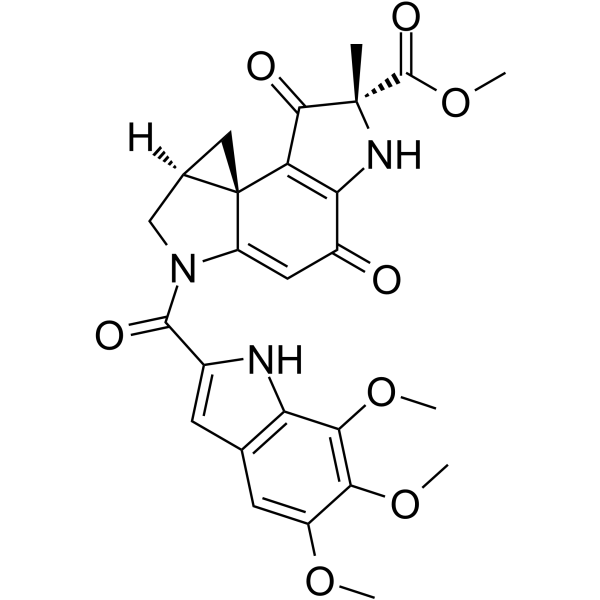 0 ImagesCat. No.: HY-12455CAS No.: 118292-34-5Duocarmycin A is an antitumor antibiotic and DNA alkylating agent with broad-spectrum antibacterial activity, which can serve as a payload for synthesizing antibody-drug conjugates (ADCs). Duocarmycin A selectively binds to the AT-rich minor groove of DNA, forms covalent adducts by alkylating the adenine N3 residue, thereby disrupting DNA structure and inhibiting its replication and transcription. Duocarmycin A induces apoptosis, sub-G1 phase accumulation and chromatin condensation, reduces the levels of pro-caspase-3/9, and induces p53-independent p21 expression. Duocarmycin A is widely used in the research of various malignancies, including leukemia, sarcoma, glioblastoma, as well as multiple solid tumor models such as lung cancer, breast cancer, and colorectal cancer.
-
Aminohexylgeldanamycin hydrochloride
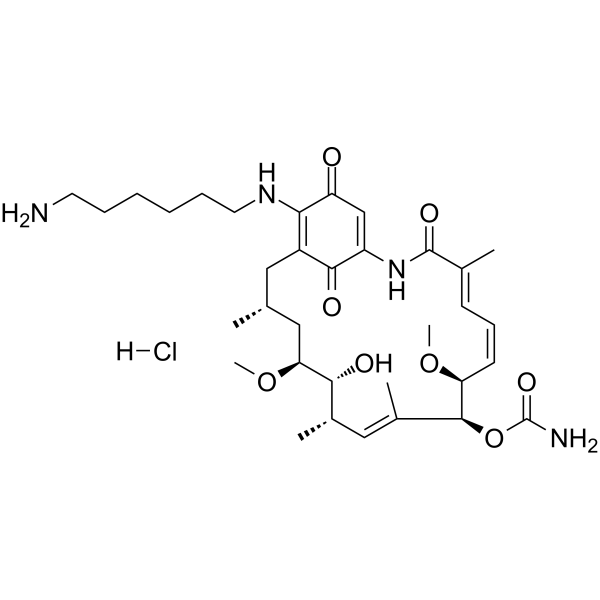 0 ImagesCat. No.: HY-133571ACAS No.: 1146534-45-3Synonyms: AHGDM hydrochlorideAminohexylgeldanamycin (AHGDM) hydrochloride, a Geldanamycin derivative, is a potent HSP90 inhibitor. Aminohexylgeldanamycin hydrochloride shows antiangiogenic and antitumor activities.
-
STING agonist-18 diTFA
 0 ImagesCat. No.: HY-150074ACAS No.: 2138299-69-9STING agonist-18 (compound 1a) diTFA is a STING agonist that can be used for synthesis of antibody-drug conjugates (ADCs), such Trastuzumab (HY-P9907) conjugate.




